How to choose goalkeeper gloves. Complete 2026 guide
Choosing the right gloves is no small detail. It is the difference between getting to the ball and not.
If you are here, you already understand something important. Gloves are not an accessory. They are the tool that connects your intent with the ball, the filter between the goal you saved and the goal you conceded. Choosing them deserves criteria, not impulse.
This guide walks you through the six decisions that matter: playing level, size, palm cut, latex type, playing surface and budget. By the end you will know exactly which Elite Sport glove to look for, no guessing required.
1. Define your playing level
First, be honest with yourself. A high-end professional glove on the hands of a goalkeeper who trains twice a week wears out before you get to use its real performance. The other way around, an entry-level glove on the hands of someone competing every weekend will fall short on grip and support.
Elite Sport divides its catalogue into five families so every goalkeeper finds their step. Flex Pro for beginners or casual players. Force Pro for the goalkeeper who already trains with intent and needs durability. Control Pro for the competitive goalkeeper looking for performance without the top-tier price. Prime Pro for elite goalkeepers who live between the posts. Kids Pro for the youngest.
Your first question is not how much the glove costs. It is how much your performance is worth.
2. Get your size right
The wrong size ruins any glove, no matter how good. Too big and you lose contact, the glove leaves with the ball before you do. Too small and your fingers bend, the palm tightens, and grip disappears.
To measure your size you need two measurements, not one. The width of your hand, taken horizontally across the knuckles, fingers together and not counting the thumb. And the length, from the base of the palm to the tip of the longest finger. Those two measurements in centimeters give you your exact size on the official Elite Sport chart. Quick reference: a size 8 corresponds to a width of 7.9 to 8.4 cm. Size 9, from 8.5 to 9 cm. Size 10, from 9.1 to 9.6 cm. Elite Sport adult gloves run from 6 to 11. Kids Pro from 3 to 6.
Key detail: if you choose a Negative or Flash X cut, go to your exact size. If you choose Rollfinger, size up by one because the cut adds volume around the finger. The full table with step-by-step instructions lives in our size guide article.
3. Choose the right palm cut
The cut determines how the glove feels on your hand and how much latex surface touches the ball. There is no best cut in absolute terms. There is a best cut for you.
Flat. Traditional, looser, visible stitching between the fingers. Good option if you like to feel the glove relaxed. In Elite Sport you find it in U1 and R1.
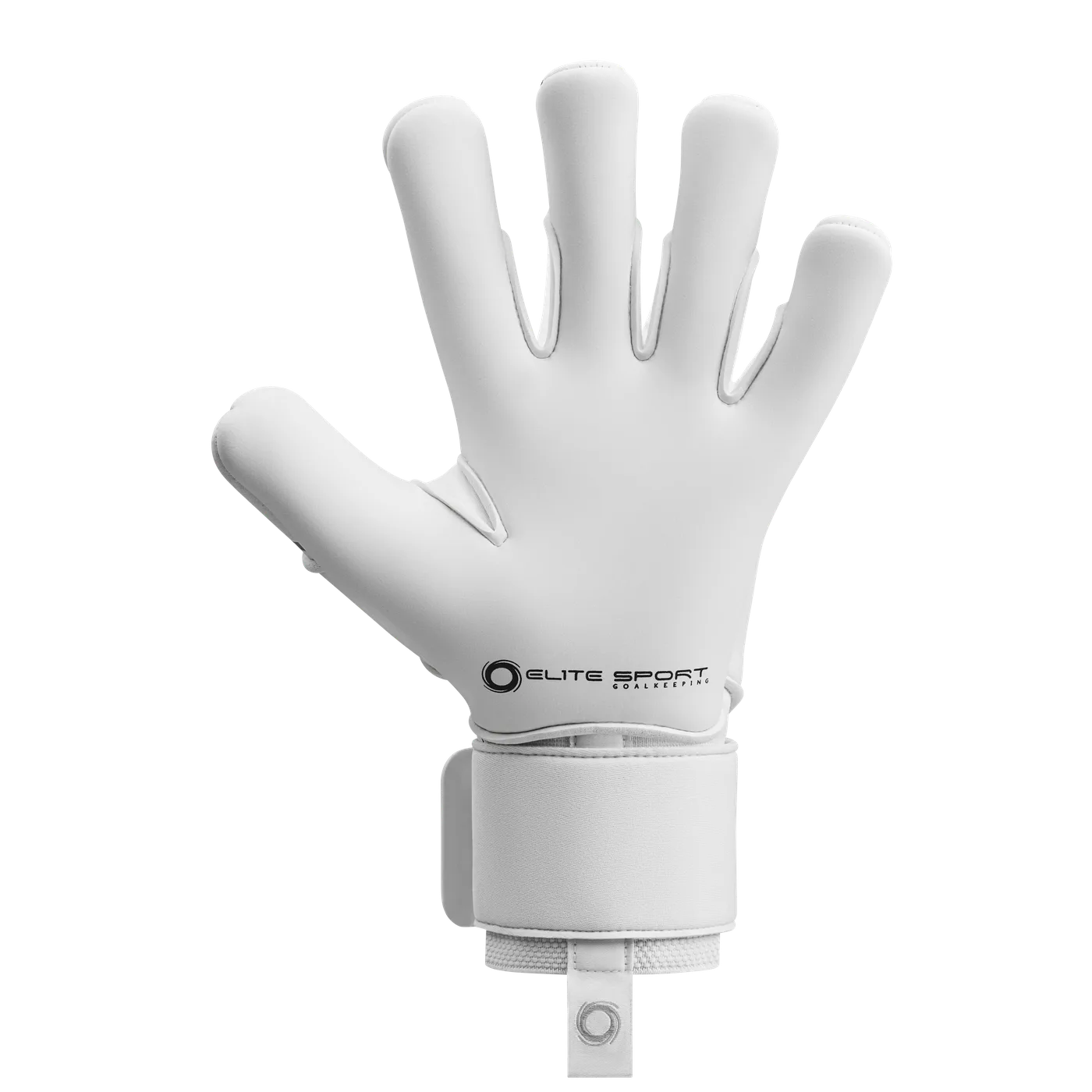
Negative. Stitching turned inward, snug fit, maximum sensitivity. The most used by professional goalkeepers. Available in T1, Supreme N, Supreme M Aqua, Combat and the Kids neoprene line.
Rollfinger. Latex wraps fully around the finger. Lots of contact area, maximum protection. Used by goalkeepers who prioritize punching. In Elite Sport it lives in Real, Black Real and Solo White.
N-Roll. A hybrid of flat and rollfinger with a rounded fingertip. Very popular in LATAM. You find it in Solo Black, Orca, Vibora, Camaleon, Arctik and New Aztlan.
Hybrid. Combines cuts in a single glove to extract the best of each. Lion and Supreme M H mix Roll on the outer fingers with Negative on the inner ones.
And the proprietary Elite Sport cuts. Flash X, exclusive to the Revolution X, with maximum wrap on fingers and palm. Speed, on the Neo and Nobre lines, outer fingers wrapped for a contact area no standard cut replicates.
4. Understand the latex you are buying
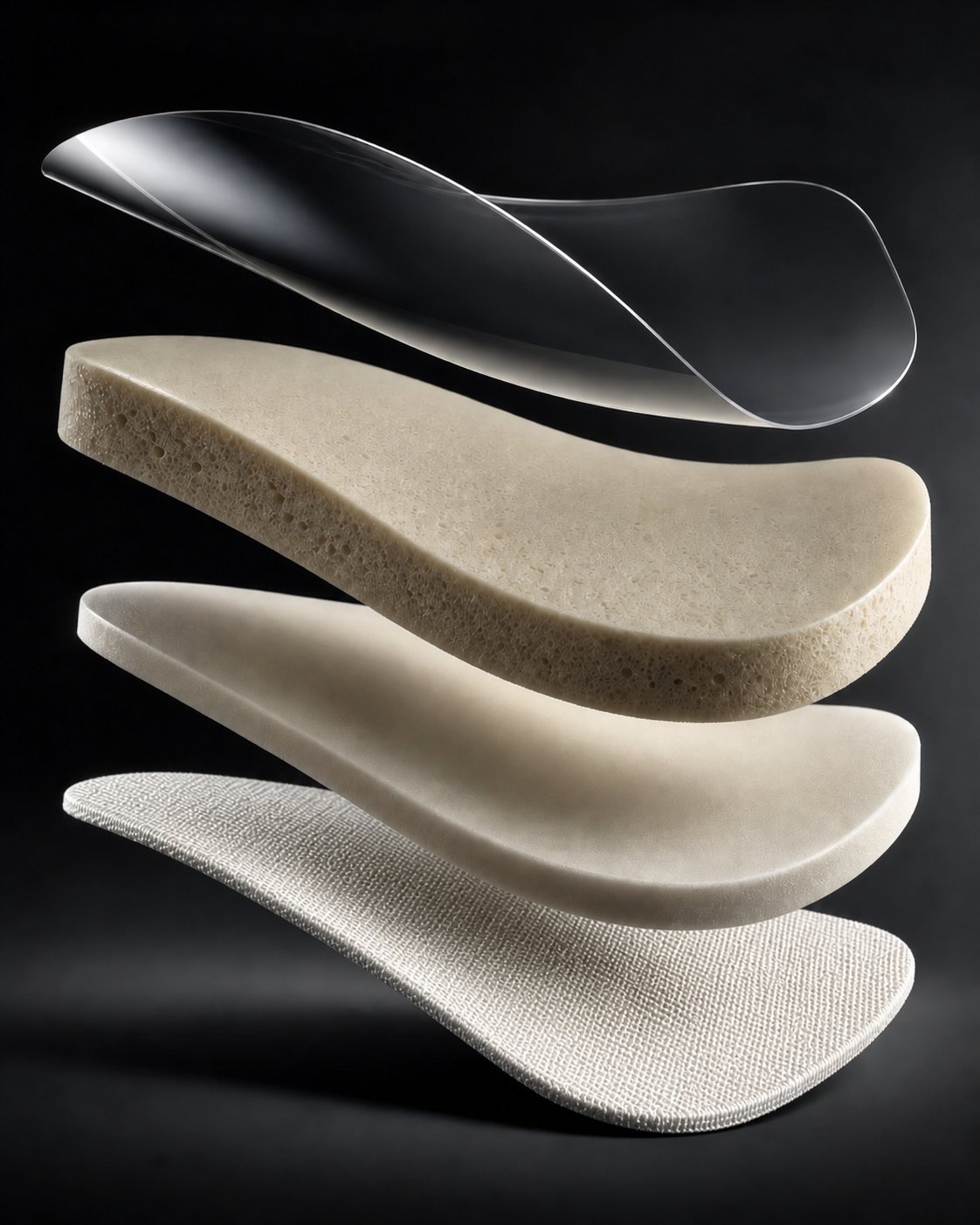
The palm latex is the heart of the glove. It determines how much it grips, how much it cushions, how long it lasts.
As a general rule, there is a tradeoff between grip and durability. The softer and tackier the latex, the faster it wears. The more resistant, the less tacky. The great latex compounds on the market balance that tradeoff, and this is where Elite Sport has invested years of development.
Ultra G Tech, the flagship latex of the Prime Pro family, takes that equation to the limit. Pro-level grip with durability well above the market standard, in 4 mm thickness. It is the brand's key selling argument and the reason an Elite Sport glove lasts when other brands are already asking for a replacement.
ESTEC AQUA is the formula optimized for wet conditions, rain and morning dew. You find it in Revolution X Aqua and Supreme M Aqua. If you play in climates that get wet often, this is your latex.
Centum+, on the Control Pro family, delivers practically professional performance at a significantly more accessible price. ES-V on Force Pro and Super Control on Flex Pro and Kids Pro complete the ladder.
5. Grass, turf, indoor: surface decides too
The playing surface dictates two things: how fast your glove wears and how tacky a latex you need.
Natural grass is soft and usually carries some moisture. The latex lasts longer and a top-tier glove performs at full. If you always play on natural grass, you can stretch the lifespan of a T1 or Supreme.
Artificial turf is abrasive. It shortens glove life because the synthetic fibers scrape the palm with every dive. Here Elite Sport recommends a trick we have been repeating for years: dampen the palm before playing. Hydrated latex wears less. And choose models built for abrasion, like Force Pro or the entry-level lines.
Indoor and futsal demand a snug cut and reactive latex in dry conditions. Solo Black and Combat work especially well on court.
6. Set your budget without guilt
An expensive glove does not make you a better goalkeeper. The right glove for your level does. This is the Elite Sport ladder by investment.
Entry level. Flex Pro (Orca, Vibora, U1, R1). Low investment, solid grip, ideal for the goalkeeper who is starting or wants a training pair without spending.
Mid range. Force Pro (Camaleon, Arctik, New Aztlan). Same mold, three colorways. A real quality jump for a small price increase.
Competitive range. Control Pro (Neo Line, Combat, Nobre, Solo White, Solo Black). For the goalkeeper who already competes and wants real performance.
Professional range. Prime Pro (T1, Revolution X, Supreme, Lion, Real, B1). Here you are buying the same gear active professional goalkeepers use.
Elite Sport advice: invest one step above where you are today, not two. An amateur goalkeeper with a T1 will wear it out before discovering what the glove offered. An amateur with a Supreme M H or Combat will feel the upgrade with every save.
Quick recap
- Define your level and pick a family: Flex Pro, Force Pro, Control Pro, Prime Pro or Kids Pro.
- Measure your hand and respect the size, adding one for Rollfinger.
- Pick the cut by feel: Negative for snug, Flat for loose, Rollfinger for protection, N-Roll or hybrid for balance.
- Check the latex. Ultra G Tech for max durability. ESTEC AQUA for moisture. Centum+ for accessible performance.
- Adapt to your surface: turf needs palm hydration. Natural grass allows top tier. Indoor demands snug fit and reactivity.
- Buy one step above your current level, not two.
REDEFINE YOUR GAME. Start with your size on Elite Sport size guide and filter by surface on the Glove Finder. When you know what you want, the Prime Pro collection is waiting.
- Goalkeeper glove cuts
- Goalkeeper glove latex types
- Goalkeeper gloves by budget
- Best goalkeeper gloves 2026
- Prime Pro collection page Prime Pro
- Glove Finder glove finder
Find the glove that fits your level, surface, and style.